

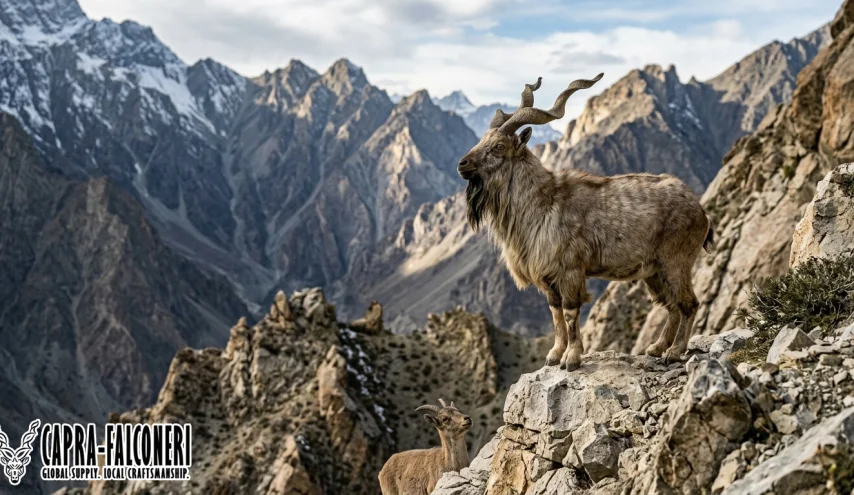
Capra falconeri (Markhor): The Complete Guide to Pakistan's National Animal, History, Habitat, Evolution & the Inspiration Behind Capra Falconeri
Why the Markhor Is Unlike Any Other Goat
Among all the wild goats that inhabit the mountains of Europe, Asia, and the Middle East, Capra falconeri, more commonly known as the Markhor, stands in a class of its own. It is not simply another member of the goat family—it is one of nature's most extraordinary achievements in evolution, perfectly adapted to survive where few other large mammals can.
While domestic goats have lived alongside humans for thousands of years, grazing peacefully across farms and grasslands, the Markhor has remained truly wild. It inhabits some of the world's most inaccessible mountain landscapes, where steep cliffs, unpredictable weather, and powerful predators constantly test its strength and intelligence.
The Markhor belongs to the genus Capra, the same scientific group that includes domestic goats, ibex, and several other wild mountain goats. However, millions of years of evolution have shaped the Markhor into a species with characteristics found nowhere else in the animal kingdom.
Every feature of its body—from its muscular legs to its uniquely twisted horns—has evolved for one purpose: survival in extreme environments.
A Giant Among Wild Goats
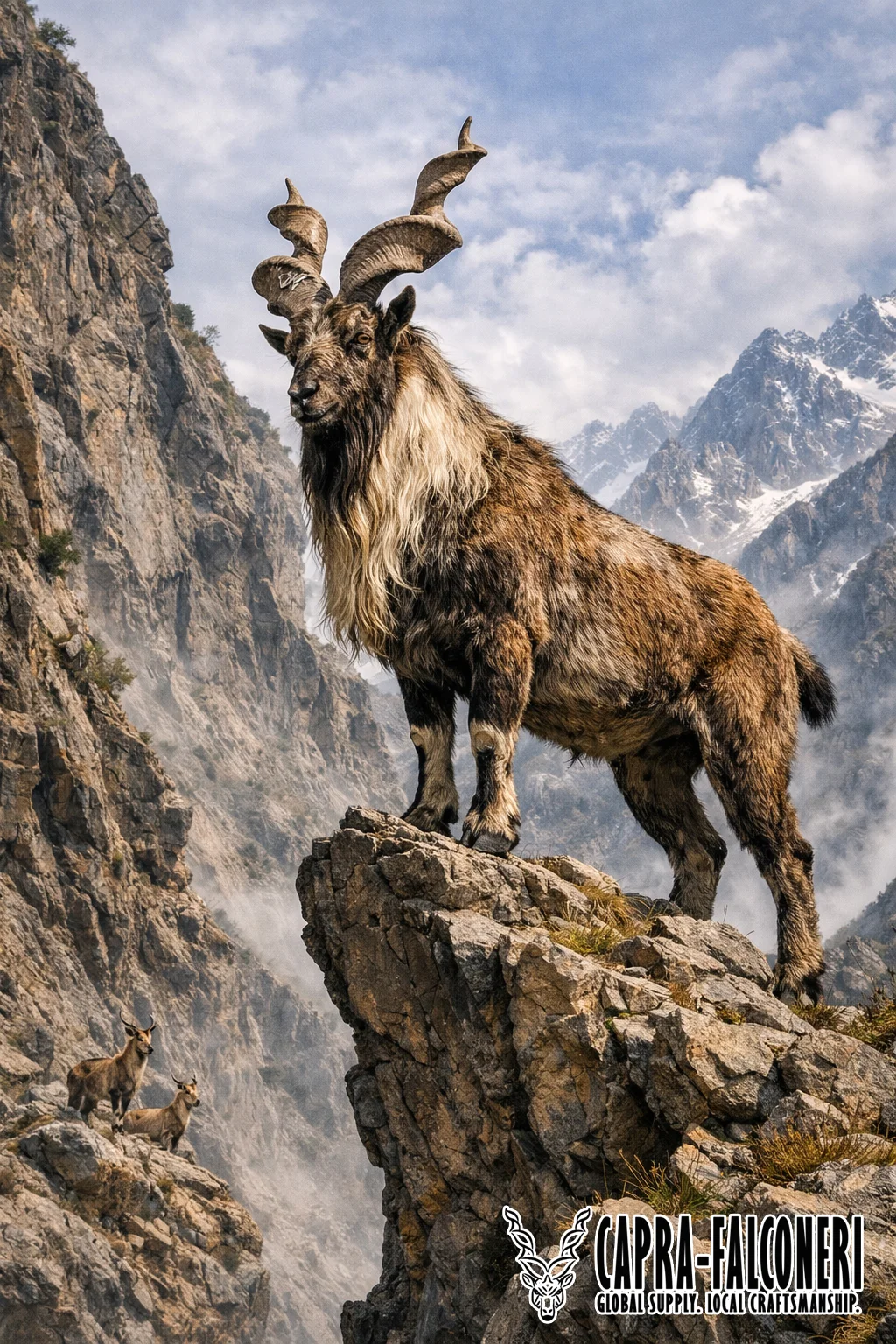
The Markhor is widely recognized as the largest living wild goat species. Adult males can stand over one meter (3.5 feet) at the shoulder, measure nearly two meters (6.5 feet) in body length, and weigh as much as 110 kilograms (240 pounds). Females are considerably smaller but share the same remarkable agility and endurance.
Unlike many other goat species that depend on speed across open terrain, the Markhor has evolved to dominate vertical landscapes. Rocky cliffs, narrow ledges, and mountain ridges that appear impossible for most animals become effortless pathways for this magnificent climber.
This combination of size, strength, balance, and intelligence has earned the Markhor its reputation as the undisputed king of the mountains.
The World's Most Extraordinary Horns
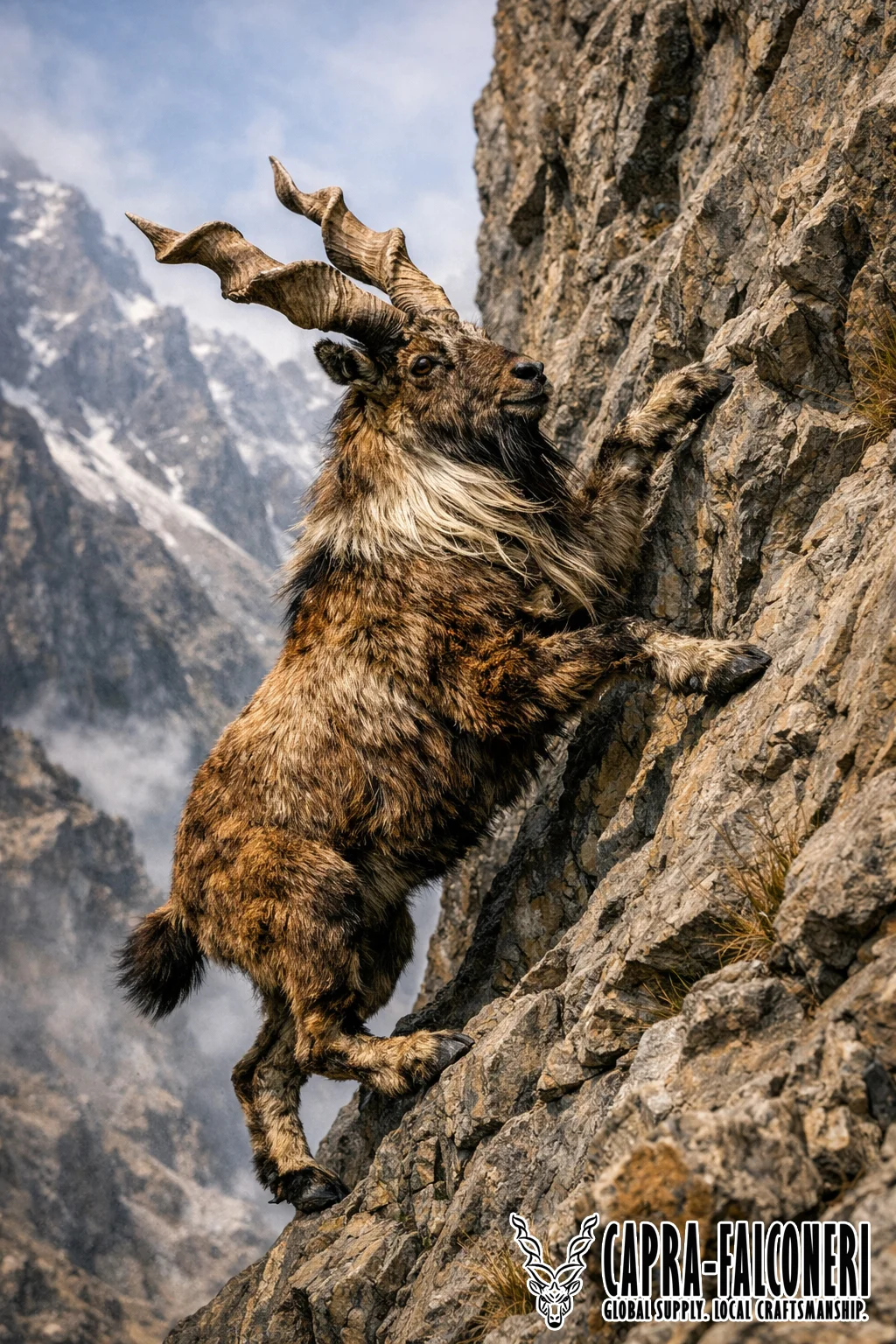
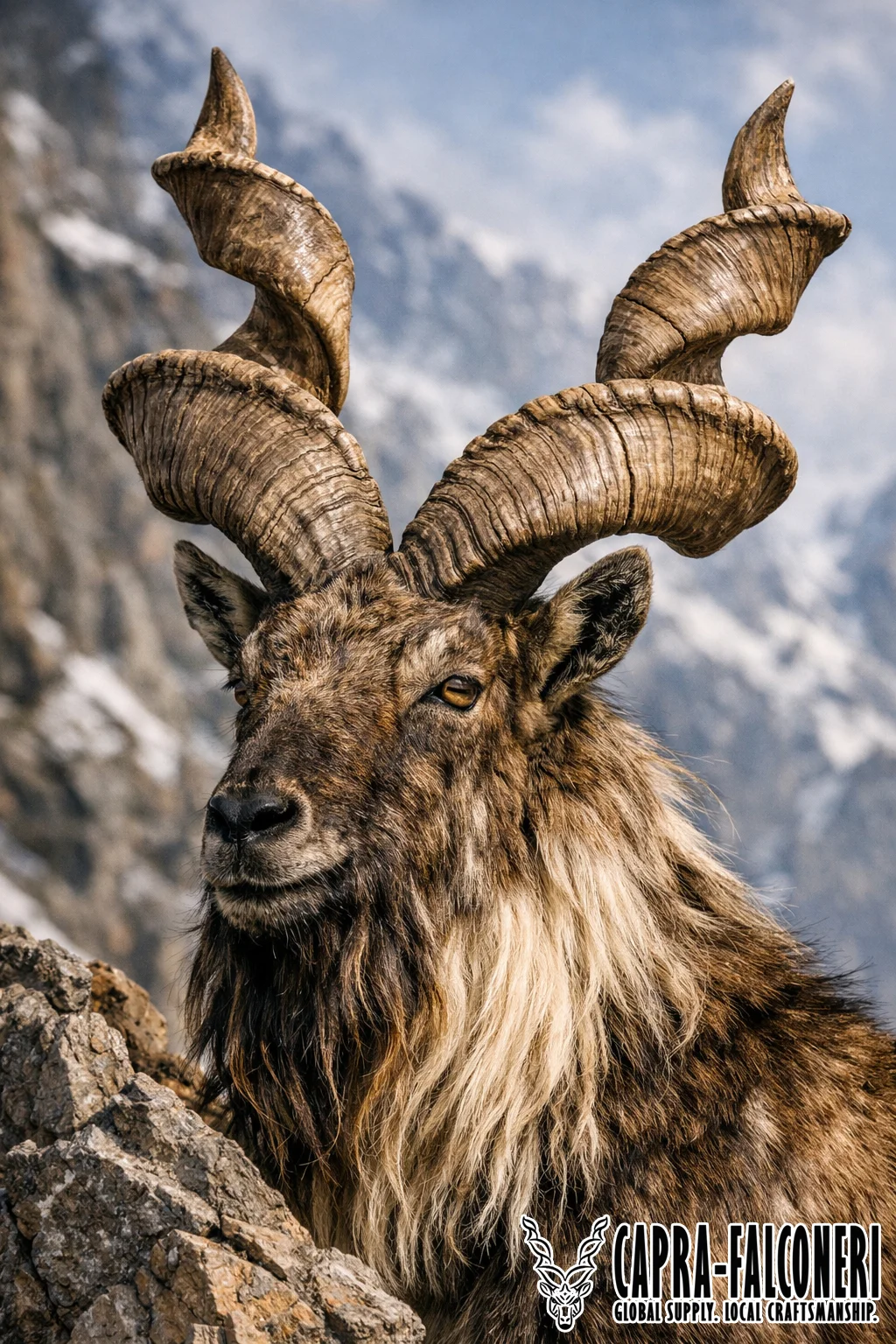
The most recognizable feature of Capra falconeri is undoubtedly its spectacular spiral horns.
These remarkable structures are among the most distinctive horns found on any mammal on Earth. Mature males develop massive corkscrew-shaped horns that can exceed 160 centimeters (over 5 feet) in length, making them some of the longest horns in the goat family.
Unlike the gently curved horns of domestic goats or the backward-arching horns of the Alpine ibex, the Markhor's horns twist dramatically upward in elegant spirals. Depending on the subspecies, the spirals may rotate clockwise or counterclockwise, creating a unique appearance that has fascinated naturalists for centuries.
These impressive horns serve several important purposes:
-
Establishing dominance among males.
-
Defending against predators.
-
Attracting females during the breeding season.
-
Demonstrating age, health, and genetic fitness.
During the annual rut, dominant males engage in dramatic horn-clashing contests that echo through the mountains. Rather than causing serious injury, these powerful encounters help determine which males earn the right to reproduce.
The horns continue growing throughout much of the animal's life, with visible growth rings that can often be used to estimate its age.
Master of Impossible Terrain
Few animals on Earth possess the climbing abilities of the Markhor. Its habitat consists of towering cliffs, broken rock faces, deep ravines, and narrow ledges where even experienced human climbers would require specialized equipment.
The Markhor's secret lies in its remarkable anatomy.
Its cloven hooves feature hard outer edges that grip rocky surfaces while softer inner pads provide exceptional traction. This natural design functions almost like modern climbing shoes, allowing the animal to maintain stability on slopes exceeding 60 degrees.
Powerful shoulder and hind-leg muscles generate explosive jumping ability, enabling the Markhor to leap confidently between rocks separated by several meters. Its low center of gravity, exceptional balance, and lightning-fast reflexes allow it to negotiate terrain where predators struggle to follow.
This mastery of vertical landscapes provides the Markhor with one of nature's greatest defenses: simply climbing somewhere that few enemies can reach.
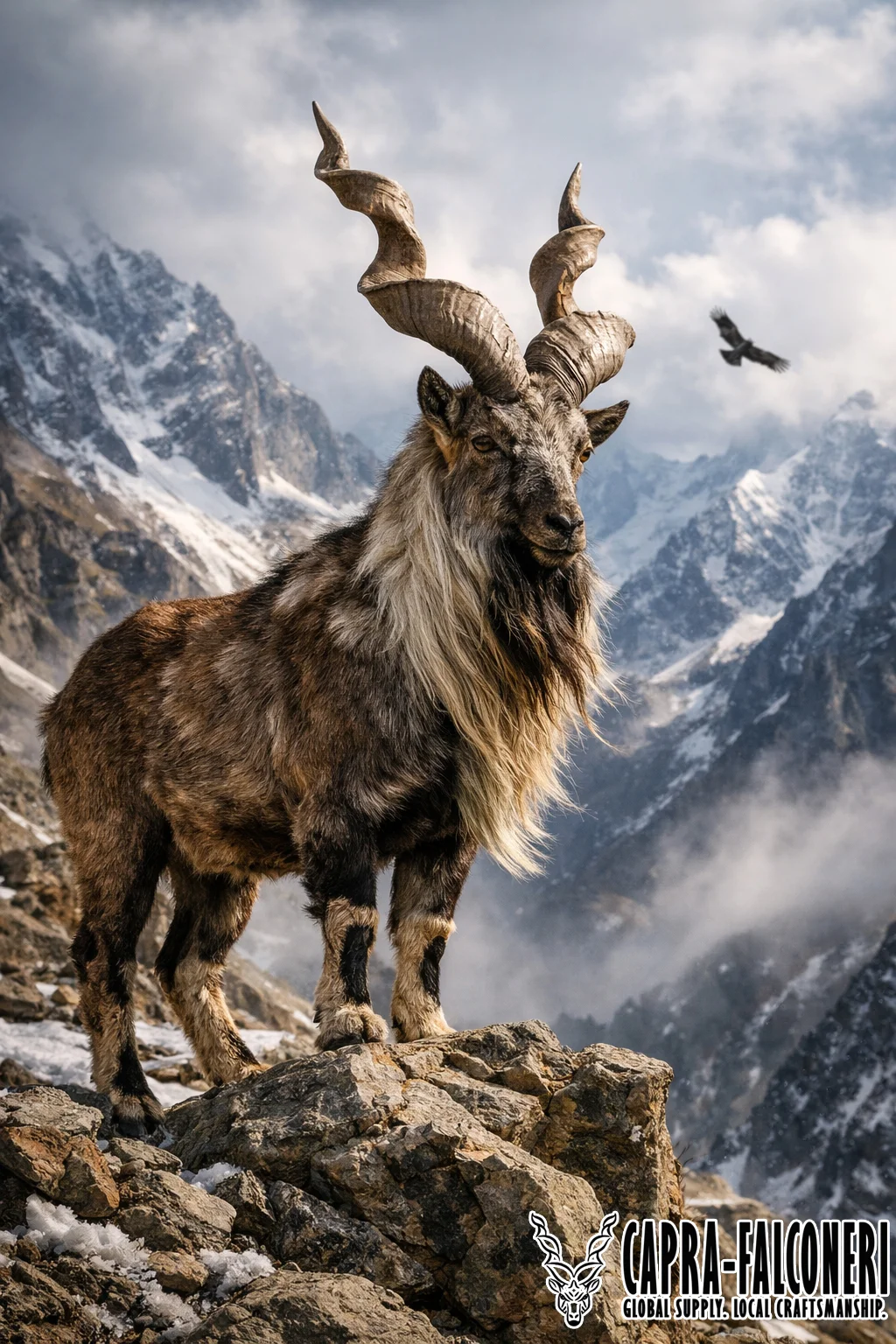
Built for Every Season
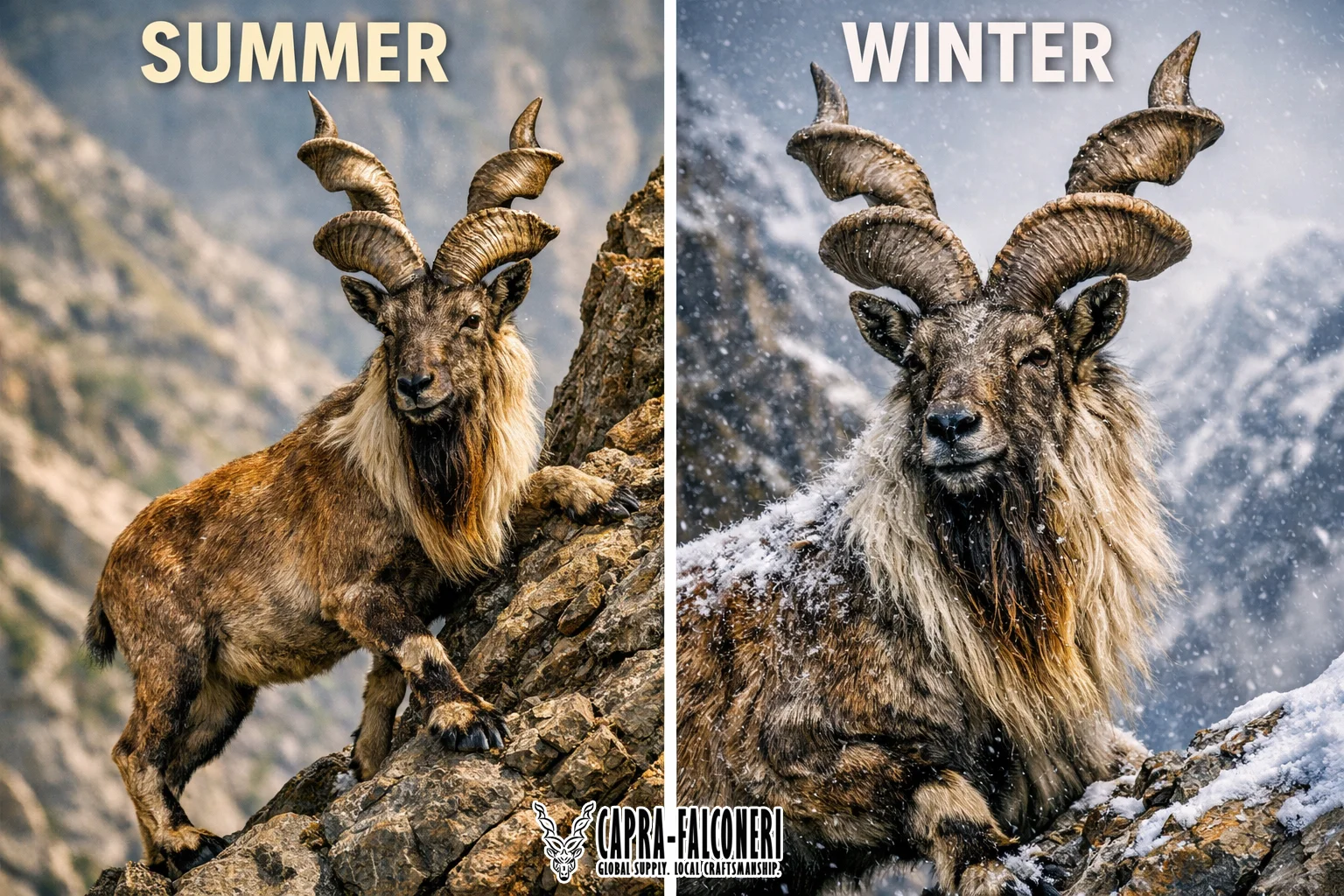
Life in the mountains means enduring dramatic seasonal changes. Summer temperatures may become surprisingly warm during the day, while winter brings deep snow, freezing winds, and sub-zero temperatures.
To survive these extremes, the Markhor has developed an extraordinary double coat. During warmer months, it wears a relatively short, lightweight coat that allows heat to escape efficiently.
As autumn approaches, a dense insulating undercoat develops beneath much longer guard hairs. Adult males also grow impressive shaggy beards and long chest hair that enhance insulation while giving them their majestic appearance.
This seasonal transformation allows the Markhor to conserve body heat without sacrificing mobility, enabling it to remain active even during harsh Himalayan winters.
Intelligence Beyond Instinct
The Markhor is far more than a powerful climber—it is also remarkably intelligent. Living in harsh mountain environments demands constant awareness of danger.
Markhors possess excellent eyesight capable of detecting movement across vast distances. Their hearing and sense of smell help identify predators long before they become visible. Rather than relying solely on speed, they constantly evaluate their surroundings, selecting escape routes and elevated refuges before danger approaches.
This combination of intelligence, memory, and environmental awareness greatly increases their chances of survival.
A Remarkable Herbivore
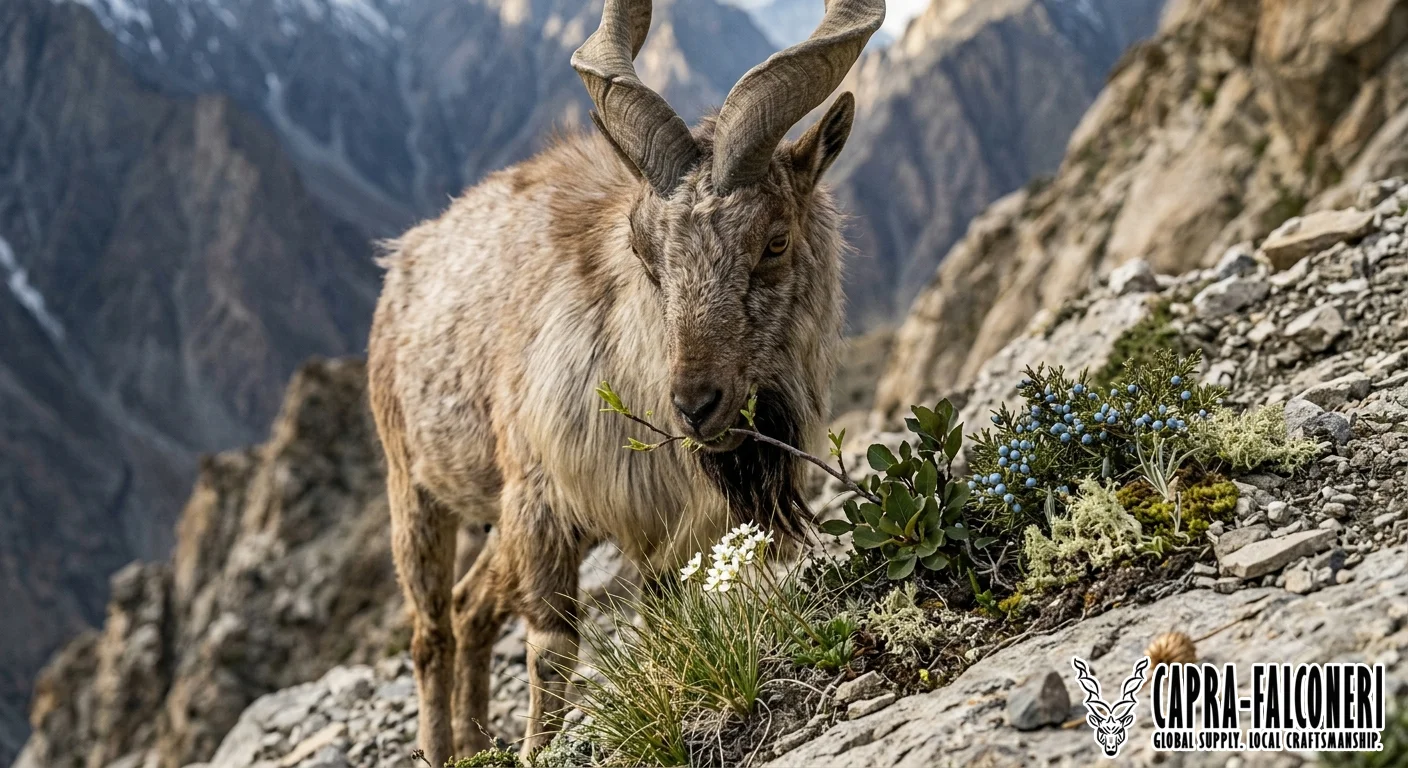
Despite its fierce appearance, the Markhor is entirely herbivorous. Its diet changes with the seasons and available vegetation.
Throughout the year, it feeds on:
-
Mountain grasses
-
Alpine herbs
-
Oak leaves
-
Juniper
-
Shrubs
-
Wild flowers
-
Mosses
-
Tree bark
-
Twigs
-
Young shoots
By consuming a wide variety of plants, the Markhor helps maintain ecological balance and contributes to seed dispersal throughout fragile mountain ecosystems.
History, Habitat, and the "Snake Eater" Legend
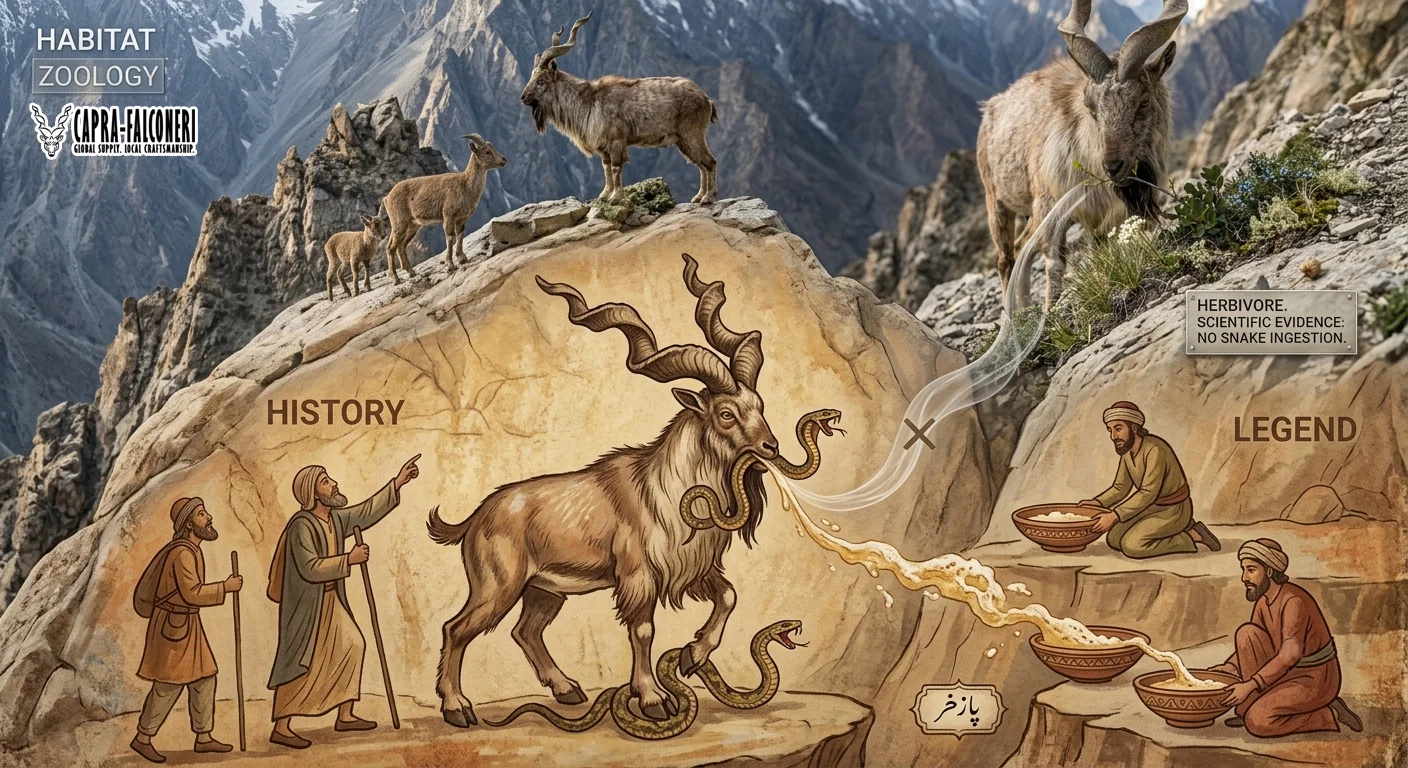
The story of the Markhor stretches back thousands of years, woven into the folklore, traditions, and mountain cultures of Central and South Asia. Long before scientists classified it as Capra falconeri, local communities admired this magnificent wild goat for its strength, agility, and mysterious appearance. Ancient travelers crossing the rugged mountains often described encounters with an animal that seemed almost impossible to reach, standing fearlessly on cliffs where no other large mammal could survive.
The common name "Markhor" originates from the Persian words "Mar" (snake) and "Khor" (eater), leading to the popular translation "snake eater." This fascinating name has inspired legends for centuries.
According to traditional folklore, the Markhor was believed to hunt and kill venomous snakes before consuming them. Stories claimed that after chewing its food, the animal produced a special foamy saliva that possessed the power to neutralize snake venom. Local villagers sometimes searched for this dried foam, believing it could be used as a natural remedy for snakebites.
Modern zoological research tells a different story. The Markhor is a strict herbivore, feeding exclusively on grasses, shrubs, leaves, herbs, and other vegetation. There is no scientific evidence that it hunts snakes or produces medicinal foam capable of curing snake venom.
Even so, the legend remains an important part of the Markhor's cultural identity. It reflects the admiration and respect mountain communities have held for this extraordinary animal throughout history and demonstrates how deeply it is woven into regional folklore.
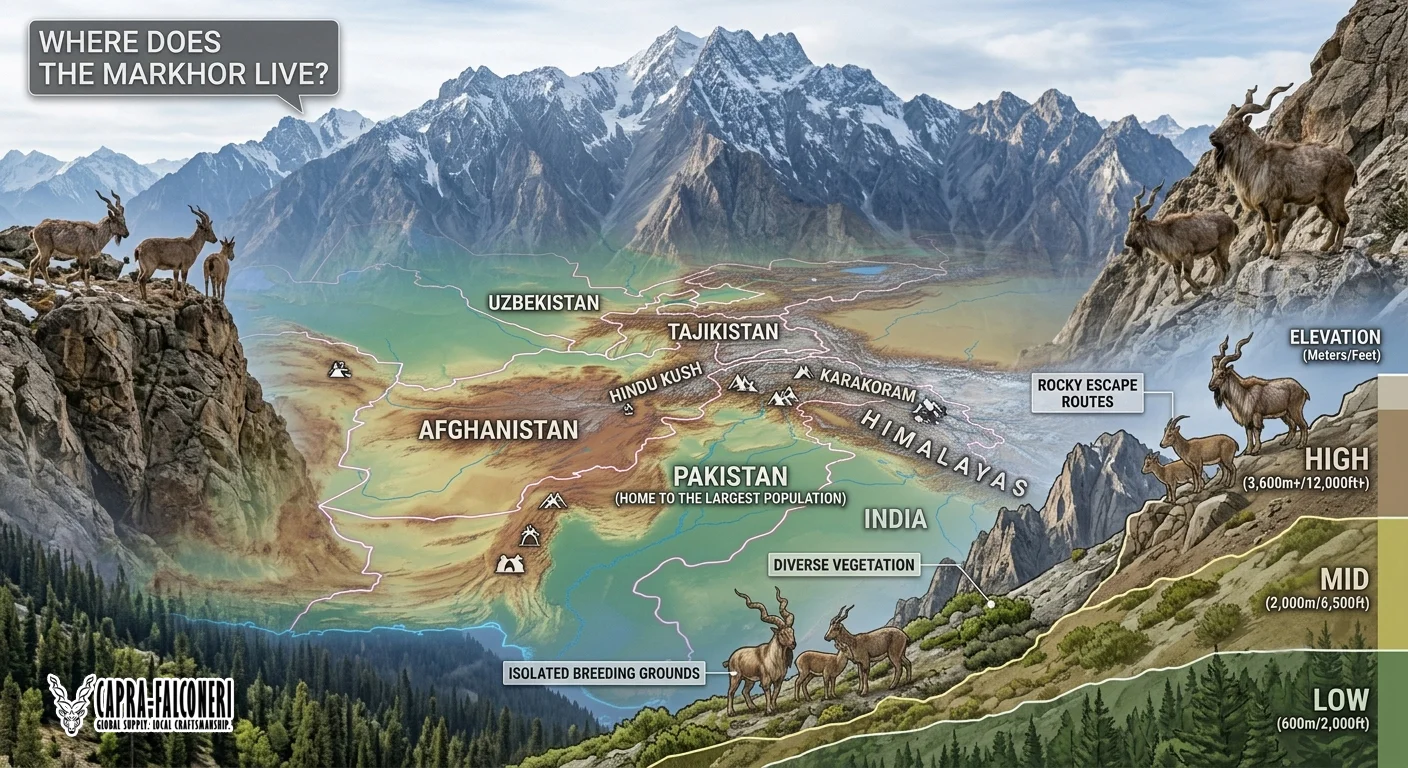
Where Does the Markhor Live?
The natural range of the Markhor spans some of the most rugged and breathtaking mountain systems on Earth. Unlike domestic goats that thrive in farms and open grasslands, the Markhor prefers steep cliffs, rocky escarpments, alpine forests, and remote valleys where human disturbance is minimal.
Today, wild populations are found across parts of:
-
Pakistan
-
Afghanistan
-
India
-
Tajikistan
-
Uzbekistan
Among these countries, Pakistan is home to the largest and most significant populations of the species. The Markhor inhabits several major mountain systems, including the Himalayas, Karakoram, and Hindu Kush, where elevations often range from 600 to over 3,600 meters (2,000–12,000 feet) above sea level, depending on the season.
These dramatic landscapes provide everything the Markhor needs: rocky escape routes from predators, diverse vegetation for feeding, and isolated breeding grounds. Their ability to move effortlessly across cliffs that appear nearly vertical allows them to exploit habitats inaccessible to most other animals.
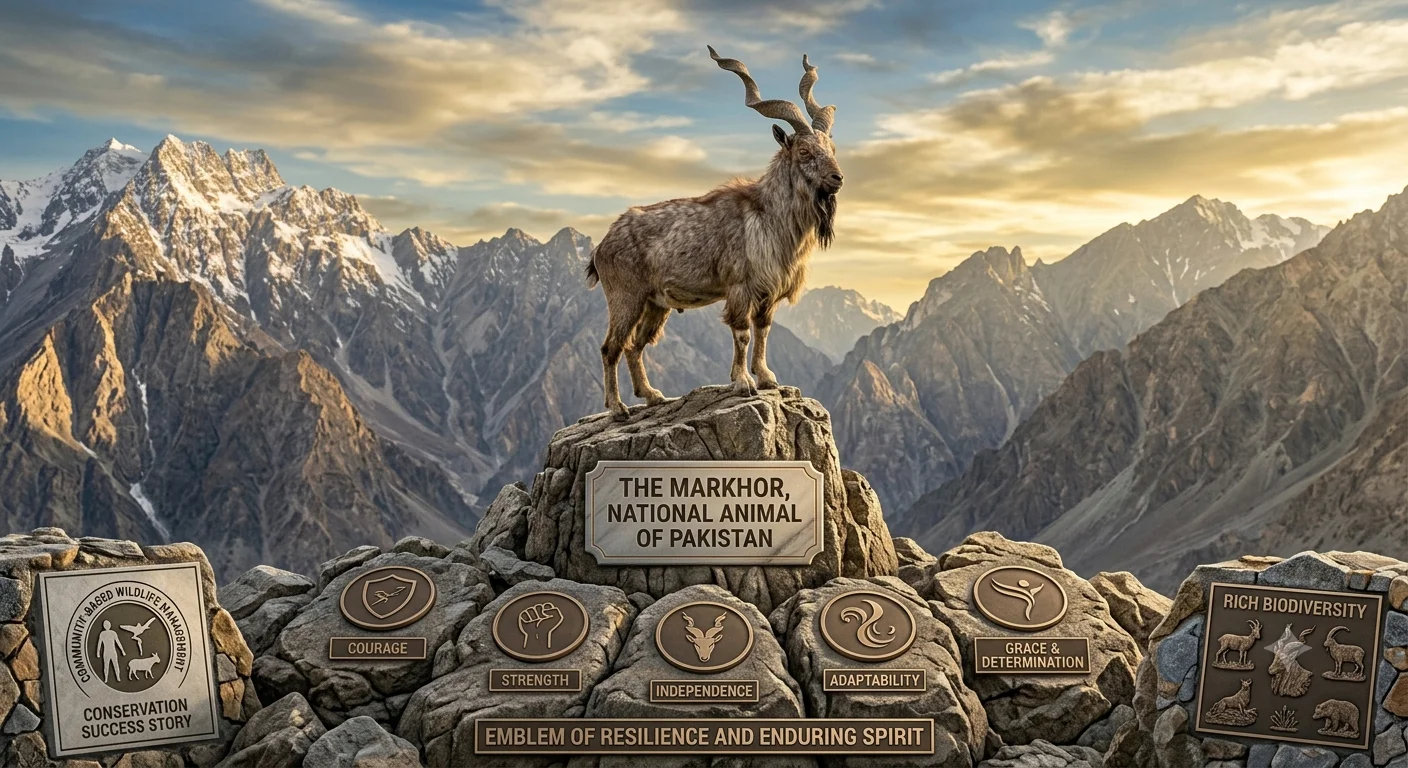
The National Animal of Pakistan
The Markhor holds a special place in the heart of Pakistan. Recognized as the National Animal of Pakistan, it symbolizes the country's natural beauty, resilience, and enduring spirit.
Its selection reflects more than its physical appearance. The Markhor embodies qualities that resonate deeply with the nation:
-
Courage in the face of adversity.
-
Strength under challenging conditions.
-
Independence and self-reliance.
-
Adaptability in harsh environments.
-
Grace balanced with determination.
For generations, the Markhor has represented the untamed beauty of Pakistan's northern mountains. It appears in conservation campaigns, educational materials, wildlife documentaries, and cultural discussions as an emblem of the country's rich biodiversity.
The species has also become an international conservation success story. Through community-based wildlife management, habitat protection, and carefully regulated conservation programs, Pakistan has played a significant role in helping Markhor populations recover in several regions. This achievement has made the animal not only a national symbol but also an example of how conservation and local communities can work together to protect endangered wildlife.
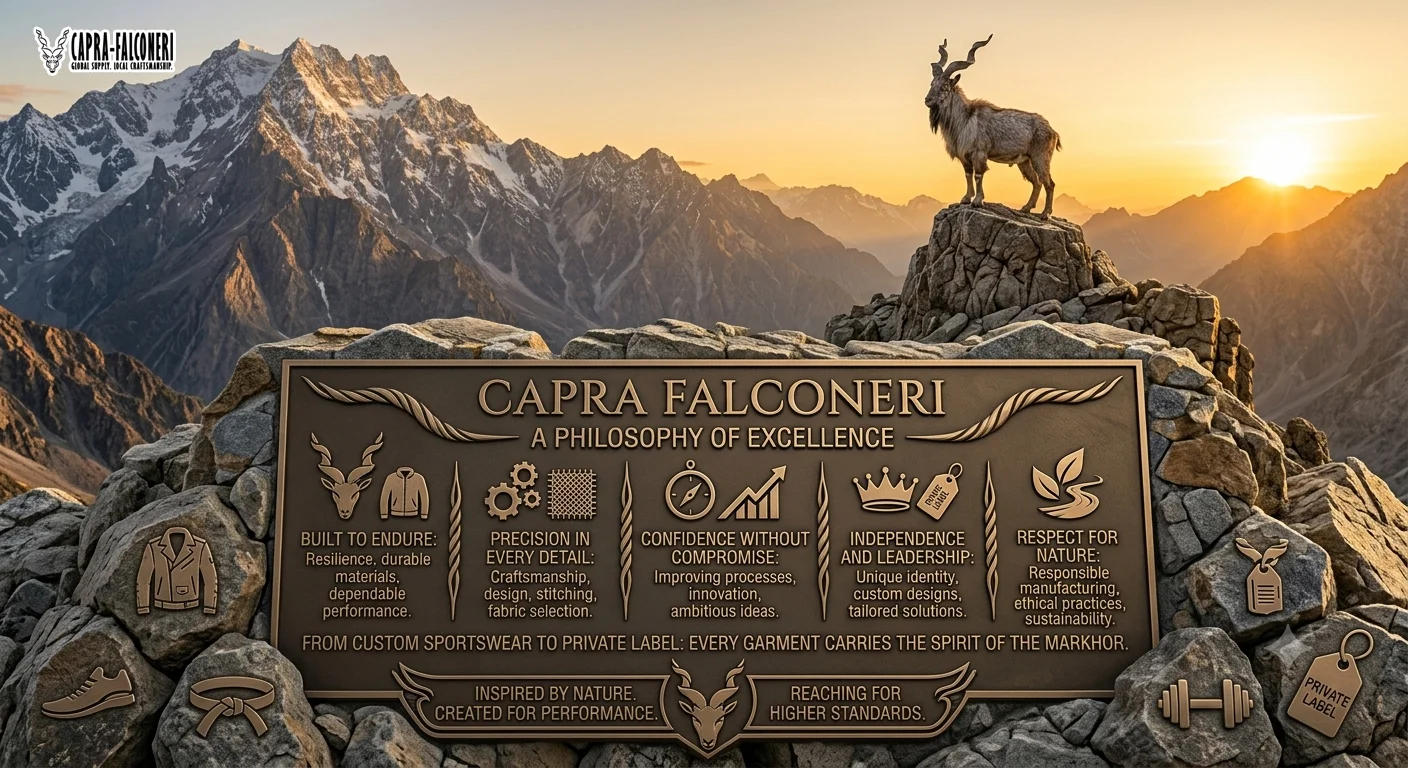
Why We Named Our Company "Capra Falconeri"
At Capra Falconeri, our name is far more than a brand identity—it is a reflection of the values that define who we are and how we approach every product we create.
When searching for a name that represented excellence, resilience, and uncompromising quality, we found inspiration in one of nature's greatest masterpieces: Capra falconeri, the Markhor.
Just as the Markhor has evolved over thousands of years to thrive in some of the harshest environments on Earth, we strive to design and manufacture products that perform with the same confidence, durability, and reliability.
The Markhor teaches us that true strength is not about size alone—it is about preparation, adaptability, and perseverance. Every climb it makes across towering cliffs reflects precision, balance, and determination. Those same principles guide our approach to manufacturing high-quality custom sportswear, rugged leather apparel, premium fitness wear, specialized martial arts uniforms, and comprehensive private-label products for clients around the world.
The Markhor inspires us in many ways:
Built to Endure
Nature engineered the Markhor to survive freezing winters, scorching summers, rugged mountains, and constant challenges. Inspired by this resilience, we focus on premium materials, durable construction, and dependable performance so our products are made to withstand demanding conditions.
Precision in Every Detail
The elegant spiral horns of the Markhor are unlike anything else in nature. They remind us that exceptional design is achieved through precision and craftsmanship. From stitching and fabric selection to pattern development and finishing, we believe every detail matters.
Confidence Without Compromise
The Markhor never follows easy paths. It confidently chooses the steepest cliffs because they offer safety and opportunity. We embrace the same philosophy by continually improving our manufacturing processes, adopting innovative techniques, and helping our clients bring ambitious ideas to life.
Independence and Leadership
Rather than blending into the ordinary, the Markhor stands apart as one of the world's most distinctive wild animals. Likewise, we aim to create products that help brands establish their own unique identity through custom designs, private-label clothing manufacturing, and tailored production solutions.
Respect for Nature
The Markhor also reminds us of the importance of protecting the natural world. As a company inspired by this remarkable species, we believe that responsible manufacturing, ethical business practices, and continuous improvement contribute to a more sustainable future.
More Than a Name—A Philosophy
For us, Capra Falconeri is not simply the scientific name of the Markhor. It represents a philosophy of resilience, innovation, craftsmanship, and continuous improvement.
Every garment we manufacture carries forward the spirit of an animal that has inspired explorers, scientists, conservationists, and mountain communities for centuries. We strive to bring that same spirit into every custom sportswear collection, bespoke leather jacket, athletic fitness garment, durable martial arts uniform, and customized retail item we create.
Like the Markhor standing confidently atop the highest peaks, we believe excellence is achieved by embracing challenges, maintaining uncompromising quality, and always reaching for higher standards.
The Evolution of a Mountain Legend
Long before the first mountaineers attempted to conquer the towering peaks of the Himalayas, Karakoram, and Hindu Kush, one remarkable animal had already mastered these landscapes. For hundreds of thousands of years, the Markhor has lived among towering cliffs, deep valleys, and rugged mountain passes where survival depends on strength, intelligence, and perfect adaptation.
The scientific name Capra falconeri reflects both its place within the goat family and its unique evolutionary journey. Although it shares a common ancestor with modern domestic goats, the Markhor followed a very different path. Isolated in remote mountain ranges over countless generations, it gradually evolved characteristics unlike those of any other goat species.
Natural selection favored individuals that could climb higher, balance better, withstand colder temperatures, and escape predators more effectively. These adaptations shaped the Markhor into one of the world's most specialized mountain mammals. Every part of its body—from its powerful legs to its distinctive spiral horns—is the result of millions of years of evolution in one of the planet's most demanding environments.
Today, the Markhor stands not only as a symbol of wilderness but also as living evidence of nature's extraordinary ability to adapt and innovate.
Nature's Perfect Mountain Athlete
If nature were to design the ultimate mountain athlete, it would look remarkably similar to the Markhor.
Unlike animals that rely primarily on speed or brute strength, the Markhor combines agility, endurance, intelligence, and balance in perfect harmony. Its muscular body is compact enough for climbing yet powerful enough to leap across deep gaps between rocky ledges.
Each hoof functions like a sophisticated natural climbing device. The hard outer edge grips uneven rock surfaces, while the softer inner pad molds itself to the terrain, creating exceptional traction. This allows the Markhor to move confidently across cliffs where even experienced climbers would hesitate.
Its exceptional balance is supported by a flexible spine, powerful shoulder muscles, and extraordinary coordination. Watching a Markhor navigate a steep mountainside often seems to defy gravity, as it effortlessly moves over terrain that appears impossible to cross.
These abilities are not learned overnight—they are the result of generations of evolution and instinct, refined through constant exposure to one of Earth's harshest environments.
Life Above the Clouds
The Markhor inhabits landscapes that many people will never experience. High above forests and valleys, where the air becomes thinner and temperatures fluctuate dramatically, these animals have created a life perfectly suited to the mountains.
The environment changes dramatically throughout the year. In spring, alpine meadows bloom with fresh grasses and wildflowers. Summer offers abundant vegetation, allowing Markhors to build strength before winter. Autumn signals the breeding season, while winter transforms the mountains into a frozen landscape covered in snow and ice.
Despite these extreme seasonal changes, the Markhor continues to thrive. It adjusts its movements according to weather conditions, descending to lower elevations during heavy snowfall and returning to higher cliffs when conditions improve. This seasonal migration allows the species to maximize food availability while minimizing exposure to danger.
Such adaptability is one of the primary reasons the Markhor has survived in these mountains for thousands of years.
A Symbol of Balance Between Strength and Grace
Many wild animals are known for either power or elegance. The Markhor possesses both.
Its muscular frame gives it tremendous physical strength, yet every movement displays remarkable grace. Whether standing proudly on a narrow cliff edge or carefully descending a rocky slope, the Markhor demonstrates complete confidence and precision.
This balance between strength and elegance has inspired artists, photographers, and wildlife enthusiasts around the world. The animal's majestic posture, flowing beard, and magnificent spiral horns create a silhouette that is instantly recognizable.
For centuries, mountain communities have admired these qualities, viewing the Markhor as a symbol of courage, wisdom, and perseverance.
An Essential Part of Mountain Ecosystems
Beyond its impressive appearance, the Markhor plays a vital ecological role within its habitat.
As a large herbivore, it helps regulate vegetation by feeding on grasses, shrubs, leaves, and young tree shoots. This natural grazing prevents certain plant species from becoming overly dominant and encourages healthy plant diversity.
The Markhor also contributes to seed dispersal. Seeds consumed with vegetation pass through the digestive system and are deposited across different parts of the mountains, helping new plants grow in suitable locations.
In addition, the species forms an important link in the mountain food chain. Healthy Markhor populations support predators such as the snow leopard and gray wolf, maintaining ecological balance throughout the region.
Protecting the Markhor therefore protects an entire ecosystem of plants, animals, and mountain habitats.
A Remarkable Conservation Success
There was a time when the future of the Markhor seemed uncertain. Habitat destruction, illegal hunting, and declining populations placed this magnificent species at considerable risk.
However, one of the most inspiring chapters in the Markhor's history has been its recovery.
In Pakistan, conservation organizations, government agencies, local communities, and wildlife experts worked together to develop innovative conservation programs. Community-based wildlife management encouraged local residents to protect rather than exploit the species. Carefully regulated conservation initiatives generated funding for habitat protection, anti-poaching efforts, and community development.
As a result, several Markhor populations have shown significant recovery over recent decades, demonstrating that conservation can succeed when local people become active partners in protecting wildlife.
Today, the Markhor serves as a global example of how responsible conservation, scientific research, and community involvement can work together to preserve endangered species.
The Markhor in Pakistani Heritage
Few animals hold as much cultural significance in Pakistan as the Markhor.
Its image reflects the rugged beauty of the country's northern landscapes and the resilience of the people who have lived among these mountains for generations.
The Markhor appears in wildlife photography, educational campaigns, tourism promotions, artwork, and cultural storytelling. Its majestic presence has helped inspire greater appreciation for Pakistan's extraordinary biodiversity.
As the National Animal of Pakistan, the Markhor reminds citizens and visitors alike that the country's natural heritage is as valuable as its historical and cultural treasures.
Protecting the Markhor is therefore about more than preserving a single species—it is about safeguarding an important part of Pakistan's national identity for future generations.
The Inspiration Behind Capra Falconeri
When we searched for a name that represented our vision, values, and commitment to excellence, no symbol captured that philosophy better than the Markhor.
Our company was founded on principles that closely mirror the qualities of Capra falconeri:
-
Strength, because quality products must endure.
-
Adaptability, because every client has unique requirements.
-
Precision, because craftsmanship is defined by attention to detail.
-
Resilience, because success comes from overcoming challenges.
-
Leadership, because innovation requires the courage to explore new paths.
Just as the Markhor has earned its place at the summit of the mountains through evolution and perseverance, we strive to earn our place through exceptional manufacturing, responsible business practices, and a relentless commitment to quality.
For us, Capra Falconeri is more than a name—it is a daily reminder to pursue higher standards, embrace continuous improvement, and create premium custom apparel that inspires confidence wherever it is worn.
#CapraFalconeri #Markhor #NationalAnimalOfPakistan #PakistanWildlife #WildGoat #MountainLife #WildlifeConservation #NatureEducation #ExplorePakistan #Biodiversity #OutdoorAdventure #CapraFalconeriBrand
Recently Reading

Hermès Epsom Kelly 20 Handbag
The Hermès Epsom Kelly 20 Handbag represents the pinnacle of French craftsmanship and timeless design. Available at Revolve Collection, this pre‑owned masterpiece is not just a handbag—it is a symbol of elegance, exclusivity, and enduring style.
 Adam Musa

Mini Jacket in Premium Cow Leather
The Mini Jacket in Premium Cow Leather #MiniJacket #LuxuryLeatherJacket is a contemporary leather essential designed for those who appreciate premium materials and timeless craftsmanship. Expertly made in Portugal #MadeInPortugal, this structured jacket features a 100% cow leather exterior #CowLeatherJacket that offers durability, refined texture, and a polished appearance suitable for everyday wear and elevated styling alike.
Available exclusively at Revolve Collection #RevolveCollection #RevolveStyle, the Mini Jacket delivers premium craftsmanship, quality materials, and versatile design, making it a valuable addition to any luxury outerwear collection #DesignerOuterwear #LuxuryWardrobeInvestment.
Adam Musa

Leather Trucker Jacket in Premium Leather with Cow Fur Paneling
When it comes to luxury outerwear, few garments combine heritage craftsmanship with contemporary design as successfully as the Leather Trucker Jacket in premium leather with cow fur paneling. Designed for individuals who appreciate premium materials, exceptional tailoring, and timeless fashion, this Luxury Leather Jacket delivers an elevated interpretation of the iconic Men’s Trucker Leather Jacket silhouette.
Available exclusively at Revolve Collection, this Designer Leather Jacket showcases genuine leather clothing, authentic Italian cow fur detailing, and meticulous Turkish craftsmanship, making it an outstanding investment for any premium leather fashion wardrobe.
Adam Musa
© 2026 Capra Falconeri . All Rights Reserved.