

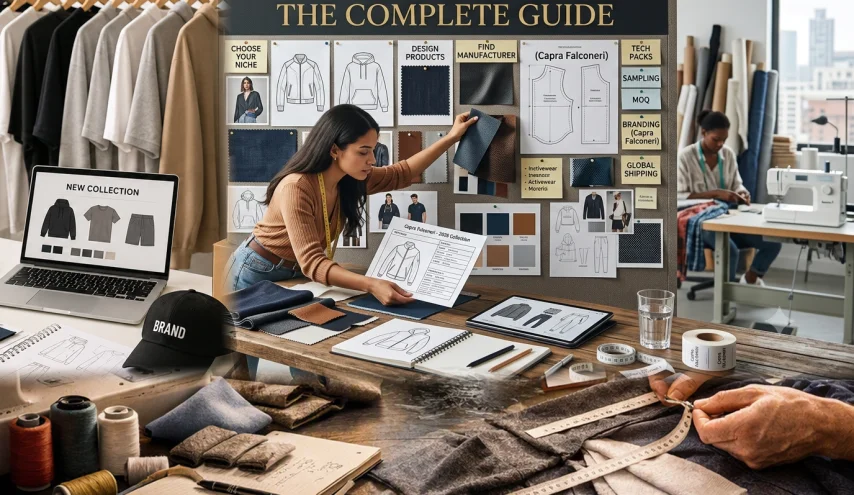
How to Start Your Own Clothing Brand in 2026 (Complete Step-by-Step Guide)
Introduction
Starting a clothing brand has never been more accessible than it is in 2026. Thanks to e-commerce, social media, print-on-demand technologies, and global manufacturing networks, entrepreneurs can transform an idea into a successful apparel business without owning a factory or maintaining large inventories.
However, while launching a brand is easier than ever, building a profitable one requires careful planning, smart decision-making, and reliable production partners. Many startups fail not because they lack creativity, but because they choose the wrong niche, underestimate production costs, overlook quality control, or work with manufacturers who cannot meet their expectations.
Whether you dream of launching a premium streetwear label, a fitness apparel brand, a sports uniform company, a workwear collection, or a private-label fashion business, understanding the complete development process will help you avoid expensive mistakes.
This guide walks through the essential steps involved in building a clothing brand—from identifying your niche and developing products to selecting manufacturing partners, creating your brand identity, preparing for production, and delivering products to customers around the world.
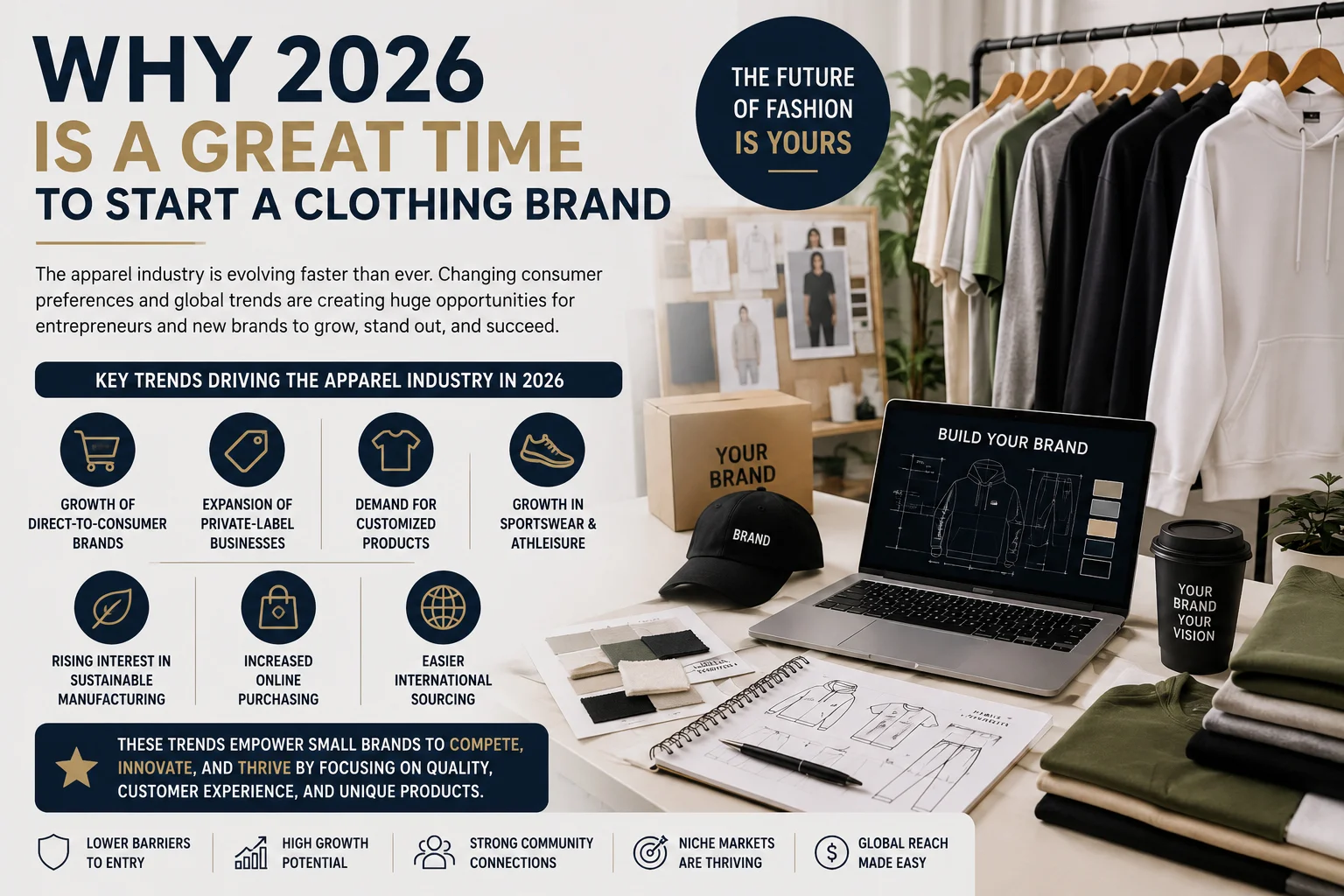
Why 2026 Is a Great Time to Start a Clothing Brand
The global apparel industry continues to evolve rapidly. Consumers increasingly seek products that reflect their lifestyles, values, and communities rather than simply buying from the largest brands. This creates opportunities for entrepreneurs who can identify underserved markets and offer distinctive products.
Several trends are shaping today's apparel market:
- Growth of direct-to-consumer brands
- Expansion of private-label businesses
- Demand for customized products
- Growth in sportswear and athleisure
- Rising interest in sustainable manufacturing
- Increased online purchasing
- Easier international sourcing
These trends allow smaller brands to compete effectively by focusing on quality, customer experience, and specialized product categories.
Is Starting a Clothing Brand Right for You?
Launching a clothing business is rewarding, but it also requires commitment. Before investing time and money, ask yourself a few practical questions:
- Can you identify a specific customer group?
- Are you prepared to invest in product development and sampling?
- Do you have a long-term vision for your brand?
- Can you market consistently through digital channels?
- Are you willing to refine products based on customer feedback?
Successful founders often begin with a clear understanding of the problem they want to solve rather than simply designing attractive garments.
Define Your Brand Vision
A strong clothing brand begins with a clear vision. Your vision influences every decision you make—from product design to marketing and customer service.
Consider defining:
- Your mission
- Your target audience
- Your product category
- Your price range
- Your quality standards
- Your brand personality
For example:
- Premium luxury
- Affordable everyday wear
- Performance sportswear
- Eco-conscious fashion
- Outdoor apparel
- Team uniforms
- Corporate clothing
Documenting these decisions early creates consistency as your business grows.
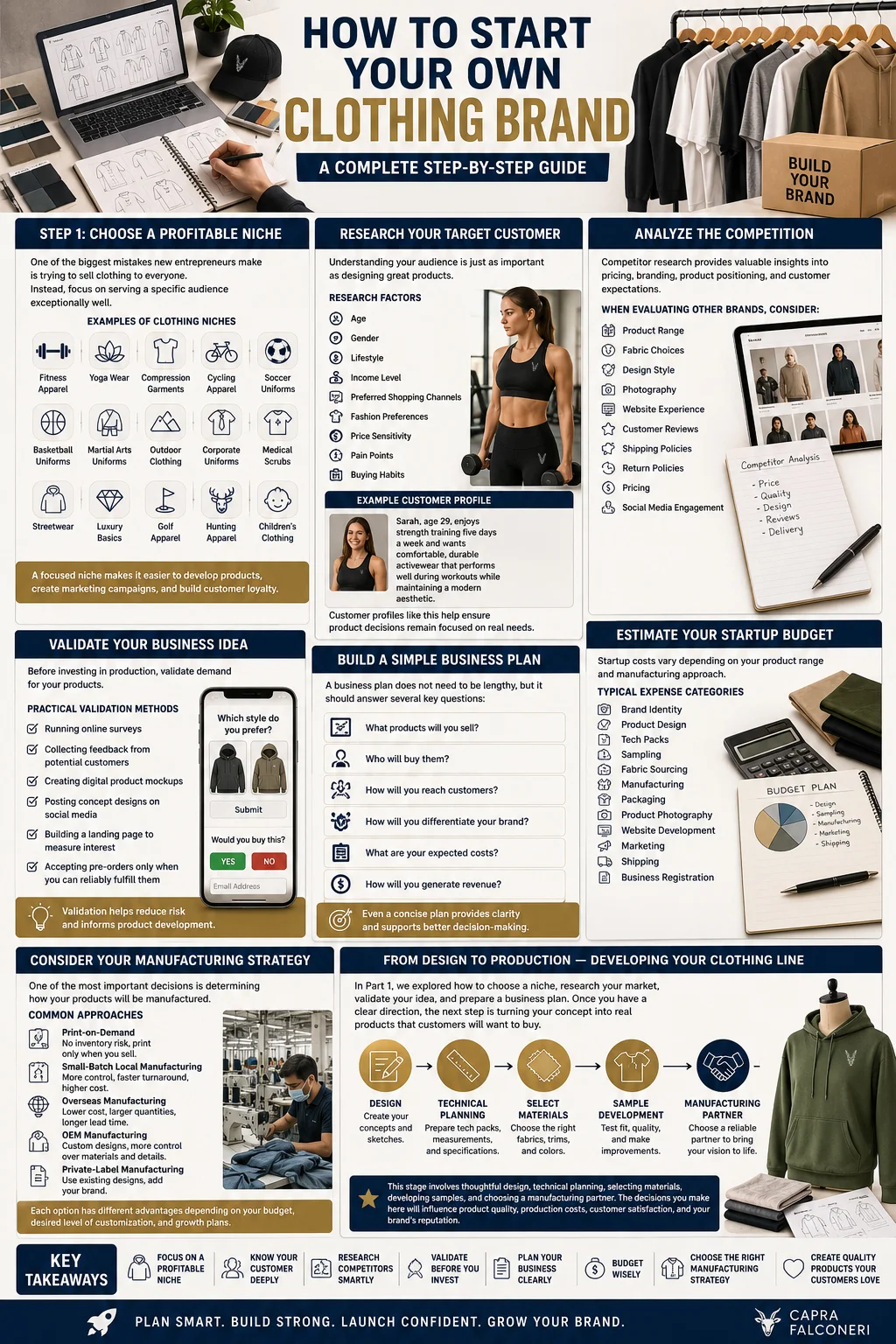
Step 1: Choose a Profitable Niche
One of the biggest mistakes new entrepreneurs make is trying to sell clothing to everyone.
Instead, focus on serving a specific audience exceptionally well.
Examples of clothing niches include:
- Fitness apparel
- Yoga wear
- Compression garments
- Cycling apparel
- Soccer uniforms
- Basketball uniforms
- Martial arts uniforms
- Outdoor clothing
- Corporate uniforms
- Medical scrubs
- Streetwear
- Luxury basics
- Golf apparel
- Hunting apparel
- Children's clothing
A focused niche makes it easier to develop products, create marketing campaigns, and build customer loyalty.
Research Your Target Customer
Understanding your audience is just as important as designing great products.
Research factors such as:
- Age
- Gender
- Lifestyle
- Income level
- Preferred shopping channels
- Fashion preferences
- Price sensitivity
- Pain points
- Buying habits
Create a simple customer profile to guide your decisions.
Example:
Sarah, age 29, enjoys strength training five days a week and wants comfortable, durable activewear that performs well during workouts while maintaining a modern aesthetic.
Customer profiles like this help ensure product decisions remain focused on real needs.
Analyze the Competition
Competitor research provides valuable insights into pricing, branding, product positioning, and customer expectations.
When evaluating other brands, consider:
- Product range
- Fabric choices
- Design style
- Photography
- Website experience
- Customer reviews
- Shipping policies
- Return policies
- Pricing
- Social media engagement
The goal is not to copy competitors but to identify opportunities where your brand can offer something distinctive.
Validate Your Business Idea
Before investing in production, validate demand for your products.
Practical validation methods include:
- Running online surveys
- Collecting feedback from potential customers
- Creating digital product mockups
- Posting concept designs on social media
- Building a landing page to measure interest
- Accepting pre-orders only when you can reliably fulfill them
Validation helps reduce risk and informs product development.
Build a Simple Business Plan
A business plan does not need to be lengthy, but it should answer several key questions:
- What products will you sell?
- Who will buy them?
- How will you reach customers?
- How will you differentiate your brand?
- What are your expected costs?
- How will you generate revenue?
Even a concise plan provides clarity and supports better decision-making.
Estimate Your Startup Budget
Startup costs vary depending on your product range and manufacturing approach.
Typical expense categories include:
- Brand identity
- Product design
- Tech packs
- Sampling
- Fabric sourcing
- Manufacturing
- Packaging
- Product photography
- Website development
- Marketing
- Shipping
- Business registration
Planning these costs in advance helps avoid unexpected financial pressure.
Consider Your Manufacturing Strategy
One of the most important decisions is determining how your products will be manufactured.
Common approaches include:
- Print-on-demand
- Small-batch local manufacturing
- Overseas manufacturing
- OEM manufacturing
- Private-label manufacturing
Each option has different advantages depending on your budget, desired level of customization, and growth plans.
From Design to Production — Developing Your Clothing Line
we explored how to choose a niche, research your market, validate your idea, and prepare a business plan. Once you have a clear direction, the next step is turning your concept into real products that customers will want to buy.
This stage involves thoughtful design, technical planning, selecting materials, developing samples, and choosing a manufacturing partner. The decisions you make here will influence product quality, production costs, customer satisfaction, and your brand's reputation.
Step 2: Design Your Clothing Collection
A successful clothing brand doesn't need hundreds of products at launch. In fact, many well-known brands began with a small, carefully curated collection.
Focus on creating a cohesive lineup that reflects your brand identity and serves your target audience.
For example:
- A fitness brand might launch with compression shirts, leggings, shorts, and tank tops.
- A streetwear brand might begin with oversized T-shirts, hoodies, cargo pants, and caps.
- A sportswear brand could introduce team jerseys, shorts, tracksuits, and training apparel.
Starting with a focused collection allows you to maintain quality, manage inventory more effectively, and gather valuable customer feedback before expanding.
Step 3: Create Professional Tech Packs
A tech pack is one of the most important documents in apparel manufacturing. It acts as the blueprint for your product, ensuring that your manufacturer understands every detail of your design.
A complete tech pack typically includes:
- Front and back garment sketches
- Measurements and size charts
- Fabric specifications
- Color references
- Stitching details
- Label placement
- Logo positioning
- Printing or embroidery instructions
- Trims and accessories
- Packaging requirements
Providing clear and accurate tech packs minimizes misunderstandings, reduces production errors, and helps maintain consistent quality across manufacturing batches.
Step 4: Choose the Right Fabrics
Fabric selection plays a significant role in how your garments look, feel, and perform. Different products require different materials depending on their intended use.
Some common fabric options include:
- Cotton for everyday comfort
- Organic cotton for eco-conscious collections
- Polyester for durability and moisture management
- Cotton-polyester blends for versatility
- Spandex (Elastane) for stretch and flexibility
- Nylon for lightweight performance wear
- Fleece for warmth
- French terry for casual apparel
- Mesh fabrics for ventilation
When selecting fabrics, consider factors such as durability, breathability, weight, stretch, shrinkage, colorfastness, and ease of care.
Understand Fabric GSM
GSM (grams per square meter) measures fabric weight and can significantly affect the final product.
General guidelines:
| Fabric Weight | Typical Use |
|---|---|
| 120–160 GSM | Lightweight T-shirts |
| 160–200 GSM | Standard casual wear |
| 200–280 GSM | Premium T-shirts and polos |
| 280–350 GSM | Hoodies and sweatshirts |
| Performance-specific | Sportswear varies based on function |
Choosing the appropriate GSM ensures your garments meet customer expectations for comfort and durability.
Step 5: Select Prints, Embroidery, and Decoration
Your branding extends beyond the garment itself. Consider the decoration methods that best suit your products:
- Screen printing
- Heat transfer
- Sublimation
- Embroidery
- Woven patches
- Silicone logos
- Reflective prints
- Puff printing
- Direct-to-garment (DTG) printing
Each method has its own advantages depending on design complexity, order quantity, and desired finish.
Step 6: Finding the Right Manufacturer
Choosing a manufacturing partner is one of the most important decisions you'll make. A reliable manufacturer can help you refine your products, maintain quality, and support your brand as it grows.
When evaluating potential manufacturers, consider:
- Experience with your product category
- Quality management systems
- Sampling capabilities
- Communication responsiveness
- Production capacity
- Lead times
- Export experience
- Customization options
- Compliance with quality standards
- Transparency in pricing and processes
Ask for samples, references, and detailed information about their production capabilities before making a commitment.
Understanding OEM Manufacturing
OEM (Original Equipment Manufacturer) production allows businesses to create products based on their own designs, specifications, and branding while leveraging the expertise and facilities of an established manufacturer.
OEM manufacturing can be beneficial for brands that want:
- Custom product designs
- Brand-specific labels
- Unique colorways
- Specialized materials
- Custom packaging
- Consistent quality
- Scalable production
This approach provides greater flexibility and control over your product line compared to purchasing generic products.
Private Label vs. OEM Manufacturing
It's helpful to understand the difference between these two manufacturing models.
Private Label generally involves selecting existing product designs that are customized with your branding, labels, and packaging.
OEM Manufacturing allows you to develop products based on your own specifications, offering greater customization in design, materials, and construction.
The right option depends on your business goals, budget, and desired level of product differentiation.
What Is MOQ (Minimum Order Quantity)?
MOQ refers to the smallest number of units a manufacturer is willing to produce in a single order.
Manufacturers set MOQs for practical reasons, including:
- Fabric purchasing requirements
- Machine setup costs
- Labor efficiency
- Production scheduling
Lower MOQs can be attractive for startups testing new products, while higher MOQs often result in lower per-unit costs for established brands.
When discussing MOQ with a manufacturer, ask whether different products or color variants can be combined to meet minimum requirements.
Step 7: Develop Product Samples
Before committing to full production, invest time in sampling. A sample allows you to evaluate the product and make adjustments before manufacturing larger quantities.
Review the sample carefully for:
- Fit and sizing
- Fabric quality
- Stitching accuracy
- Logo placement
- Color consistency
- Printing or embroidery quality
- Comfort and functionality
- Overall construction
Gather feedback from team members or potential customers and request revisions if necessary.
Step 8: Build Your Brand Identity
Your brand identity encompasses more than just a logo. It shapes how customers perceive your business and influences purchasing decisions.
Key branding elements include:
- Brand name
- Logo
- Color palette
- Typography
- Brand voice
- Product photography style
- Packaging design
- Customer experience
Consistency across these elements helps build recognition and trust over time.
Labels and Garment Branding
Professional labeling enhances your products and communicates important information to customers.
Common label types include:
- Woven neck labels
- Printed neck labels
- Size labels
- Care labels
- Hang tags
- Barcode stickers
- QR codes linking to product information or your website
Ensure labels comply with the regulations of the countries where you plan to sell your products.
Packaging Matters
Packaging is often the first physical interaction customers have with your brand.
Consider packaging that is:
- Protective
- Attractive
- Functional
- Cost-effective
- Environmentally responsible
Common packaging options include recyclable poly bags, branded boxes, tissue paper, and custom thank-you cards.
Prepare for Production
Before approving full production, confirm that you have finalized:
- Tech packs
- Approved samples
- Fabric selections
- Color approvals
- Size specifications
- Labels and packaging
- Production quantities
- Delivery timelines
Clear documentation helps ensure a smooth manufacturing process and reduces the likelihood of costly mistakes.
Production, Launch, Growth, and Building Long-Term Success
After approving your product samples, you're ready to move into full-scale production. This is where careful planning, consistent communication, and quality oversight become especially important. Even the best designs can fall short if production standards are not maintained.
Step 9: Prepare for Production
Before manufacturing begins, confirm every product specification in writing. This includes approved samples, measurements, colors, materials, branding elements, packaging requirements, and delivery schedules. Clear documentation helps reduce misunderstandings and keeps everyone aligned.
A production checklist should include:
- Final approved sample
- Tech pack
- Size specifications
- Fabric and trim approvals
- Artwork files
- Label and packaging details
- Order quantities
- Delivery timeline
- Payment terms
- Shipping instructions
Step 10: Prioritize Quality Control
Quality control is an ongoing process rather than a final inspection. Establish checkpoints throughout production to verify that garments match approved specifications.
Common inspection points include:
- Fabric quality
- Color consistency
- Measurements and sizing
- Stitching accuracy
- Print or embroidery placement
- Label attachment
- Packaging
Addressing issues early is generally more efficient than correcting them after production is complete.
Step 11: Plan Your Shipping Strategy
Choose a shipping method based on your timeline, budget, and order size.
- Air freight is faster but typically more expensive.
- Sea freight is often more economical for larger shipments but requires longer transit times.
Also consider customs requirements, duties, taxes, insurance, and documentation for the destination country.
Step 12: Prepare for Launch
A successful launch is about more than having inventory available. Prepare your marketing assets in advance, including:
- Product photography
- Detailed product descriptions
- Size guides
- Pricing
- Email announcements
- Social media content
- Customer support information
Launching with a coordinated plan helps create a stronger first impression.
Common Mistakes to Avoid
Many new clothing brands encounter similar challenges. Being aware of them can help you avoid unnecessary costs.
- Trying to launch too many products at once
- Choosing the lowest-cost manufacturer without evaluating quality
- Skipping the sampling process
- Ignoring customer feedback
- Underestimating shipping and import costs
- Inconsistent branding
- Poor product descriptions
- Weak quality control
- Unrealistic pricing strategies
- Neglecting post-purchase customer service
Working Effectively With a Manufacturing Partner
A productive manufacturer relationship is built on clear communication, realistic expectations, and mutual trust.
Good practices include:
- Providing complete specifications
- Responding promptly to questions
- Planning production schedules in advance
- Reviewing samples carefully
- Giving constructive feedback
- Maintaining organized documentation
Long-term partnerships often lead to smoother production and continuous product improvements.
Growing Beyond Your First Collection
Once your initial products are performing well, consider expanding strategically rather than rapidly.
Possible growth opportunities include:
- Introducing complementary products
- Entering new geographic markets
- Offering seasonal collections
- Collaborating with creators or organizations
- Improving sustainability initiatives
- Investing in stronger customer retention programs
Growth is usually more sustainable when guided by customer demand and operational readiness.
Frequently Asked Questions
How much money do I need to start a clothing brand?
The required investment depends on your product range, manufacturing approach, and marketing strategy. Starting with a focused collection and validating demand before scaling can help manage costs.
Do I need design experience?
Not necessarily. Many founders work with freelance designers or technical developers to translate concepts into production-ready specifications.
What is a tech pack?
A tech pack is a detailed document that communicates every aspect of a garment to the manufacturer, including measurements, materials, construction details, and branding requirements.
Why are samples important?
Samples allow you to evaluate fit, quality, and construction before committing to production, reducing the risk of costly mistakes.
Can I start with a small order?
Some manufacturers offer lower minimum order quantities, while others specialize in larger production runs. Requirements vary depending on the product and manufacturing process.
Final Thoughts
Building a successful clothing brand takes patience, planning, and continuous learning. Strong products, a clear brand identity, and reliable operations matter far more than chasing short-term trends.
Take time to understand your customers, invest in product development, communicate clearly with manufacturing partners, and maintain consistent quality standards. As your brand grows, focus on improving each stage of the process—from design and production to customer experience and long-term relationships.
Every established apparel company started with a first collection. With thoughtful preparation, attention to quality, and a willingness to adapt, your clothing brand can develop into a business that serves customers well and grows sustainably over time.
#ClothingBrand , #FashionBusiness , #StartupBrand , #ApparelManufacturing , #PrivateLabel , #OEMManufacturing , #CustomClothing , #Sportswear , #StreetwearBrand , #FashionEntrepreneur , #MadeToOrder , #GlobalManufacturing
Recently Reading
Hermès Matte Alligator Kelly 20 Sellier Handbag
The Hermès Matte Alligator Kelly 20 Sellier Handbag is a rare collectible that embodies timeless French craftsmanship and iconic design. Available exclusively through Revolve Collection under FWRD Renew, this authentic pre‑owned handbag offers collectors and fashion enthusiasts an opportunity to own one of the world’s most coveted luxury accessories.
 Adam Musa
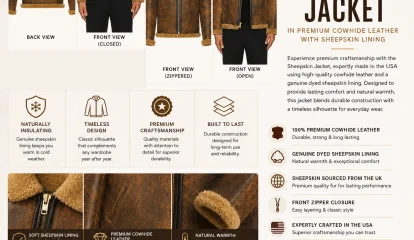
Schott Sheepskin Jacket in Premium Cowhide Leather with Sheepskin Lining
The Schott Sheepskin Jacket from Revolve Collection is a heritage piece that blends rugged durability with refined comfort. Crafted in the USA from 100% premium cowhide leather and lined with genuine dyed sheepskin sourced from the United Kingdom, this jacket delivers unmatched warmth, structure, and timeless appeal.
For those seeking luxury leather outerwear that balances authentic craftsmanship with modern style, the Sheepskin Jacket Cowhide Leather is the ultimate investment.
Adam Musa
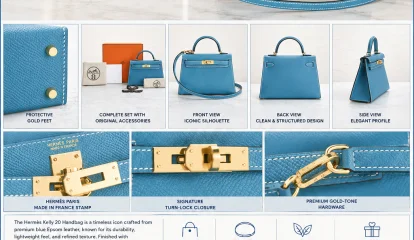
Hermès Kelly 20 Handbag in Blue Epsom Leather with Gold‑Tone Hardware
The Hermès Kelly 20 Handbag from Revolve Collection is the epitome of timeless elegance and refined craftsmanship. Handcrafted in France, this Hermès Paris luxury handbag showcases premium blue Epsom leather, celebrated for its durability, lightweight feel, and distinctive textured finish.
Accented with signature gold‑tone hardware, the Hermès Kelly bag embodies sophistication and versatility — a perfect blend of heritage and modern design. Its iconic turn‑lock closure, structured silhouette, and compact proportions make it a collector’s favorite among designer handbags for women.
Adam Musa
© 2026 Capra Falconeri . All Rights Reserved.